
Fast Link
- What is Business Intelligence (BI)?
- Benefits of Business Intelligence in Organizations
- Difference Between BI and Traditional Analytics
- Components of a BI System
- BI Applications Across Different Sectors
- How to Choose the Right BI System?
- Future of Business Intelligence
- Frequently Asked Questions
- Conclusion
What is Business Intelligence (BI)?
Business Intelligence (BI) refers to technologies, tools, and processes used to collect, process, and analyze data from various sources to support decision-making and enhance organizational performance.
BI encompasses:
- Gathering data from multiple systems (ERP, CRM, databases, external applications).
- Analyzing data with advanced reporting and analytical tools.
- Providing clear insights that help in strategic and operational decisions.
Such systems are a key pillar of digital transformation, helping organizations extract maximum value from their data.
Benefits of Business Intelligence in Organizations
- Improved Decision-Making: Based on accurate data and in-depth analysis.
- Enhanced Operational Efficiency: By identifying bottlenecks and optimizing processes.
- Discovering New Opportunities: Through market insights and trend identification.
- Cost Reduction: Using demand forecasting and minimizing waste.
- Better Customer Experience: By understanding customer behaviors and preferences.
Difference Between BI and Traditional Analytics
- Traditional Analytics:
- Focuses on static, predefined reports.
- Relies mainly on historical data.
- Generally less interactive.
- Business Intelligence (BI):
- Offers interactive and dynamic reporting.
- Processes real-time data for immediate insights.
- Leverages AI and advanced analytics for deeper understanding.
Components of a Business Intelligence System
- Data Sources: Databases, ERP, CRM, web platforms.
- ETL Tools: Extract, Transform, Load tools for data preparation.
- Data Warehouse: Organized storage of collected data.
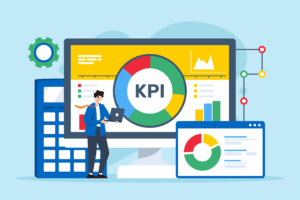
- Analytics and Visualization Tools (Dashboards & Reports): For interactive and clear data presentation.
- AI Engines and Advanced Analytics: To provide predictive insights and informed decision-making.
Applications of BI in Various Sectors
• Retail: Analyzing customer behavior, managing inventory, and forecasting sales.
• Healthcare: Enhancing care quality, optimizing resources, tracking physician performance.
• Financial Services: Risk assessment, fraud detection, and portfolio optimization.
• Manufacturing: Monitoring production, improving quality, and predictive maintenance.
• Education: Tracking academic performance, improving curriculum, and analyzing student data.
How to Choose the Right BI System for Your Business?
- Define Your Goals: Identify key questions and available data.
- Ease of Use: Consider the technical skills required for your team.
- Integration: Ensure compatibility with current systems (ERP, CRM).
- Flexibility and Scalability: Ability to grow and adapt as business evolves.
- Support and Training: Availability of ongoing assistance and guidance.
Future of Business Intelligence: Where Are We Heading?
- AI-Enhanced BI: Using AI/ML for automated and advanced analysis.
- Predictive Analytics: Forecasting trends and future behaviors accurately.
- Cloud BI: Flexible access through cloud platforms.
- Interactive Data Visualization: Presenting data in user-friendly ways.
- Integration with Other Technologies: IoT, Big Data, and process automation.
Frequently Asked Questions about Business Intelligence
Is BI suitable for all companies?
Yes, it can be adapted for small, medium, and large organizations across sectors.
Does BI require specialized technical teams?
It depends on the system, but many solutions are beginner-friendly.
Does BI replace human expertise?
No, it supports decision-making by providing data-driven insights.
How long does it take to implement a BI system?
Implementation varies based on data volume and system complexity, typically from weeks to months.
Is BI secure regarding data protection?
Modern solutions implement robust security measures to ensure data privacy and safety.
You can also read Key Performance Indicators (KPIs): Your Comprehensive Guide
Conclusion
Business Intelligence is essential for improving competitiveness and performance.
With modern BI tools, companies can analyze data effectively, make strategic decisions, and achieve sustainable growth.
At Happy Tech, we provide integrated BI solutions to support your business goals with advanced global technologies.