Fast Link
What Are Mobile Applications?
Mobile applications (mobile apps) are software programs designed to run on smartphones and tablets. They allow users to access services, content, or specific tools easily through a user-friendly interface.
Types of mobile applications include:
• Native Apps
• Hybrid Apps
• Progressive Web Apps (PWA)
Mobile apps are an essential tool for businesses to reach customers directly, improve mobile engagement, and increase sales in a smartphone-driven world.
Benefits of Mobile Applications for Businesses
- Enhance User Experience: Design tailored to customer needs improves overall satisfaction with your mobile app.
- Increase Sales: Mobile apps provide direct access to customers, boosting conversions and revenue.
- Instant Communication: Send push notifications and real-time alerts to engage users.
- 24/7 Availability: Mobile applications allow users to interact with your business anytime.
- Analyze User Behavior: Track user activity within the app to optimize services and marketing strategies.
Types of Mobile Applications
- Native Apps
• High performance and fast loading
• Seamless user experience
• Built using platform-specific programming languages (Android / iOS) - Hybrid Apps
• Cross-platform compatibility
• Faster and cost-effective development
• Slightly lower performance than native apps - Progressive Web Apps (PWA)
• Runs via web browser without installation
• Easy to update
• Cost-efficient solution for businesses
Technical Structure of Mobile Apps
Mobile app development relies on key components, including:
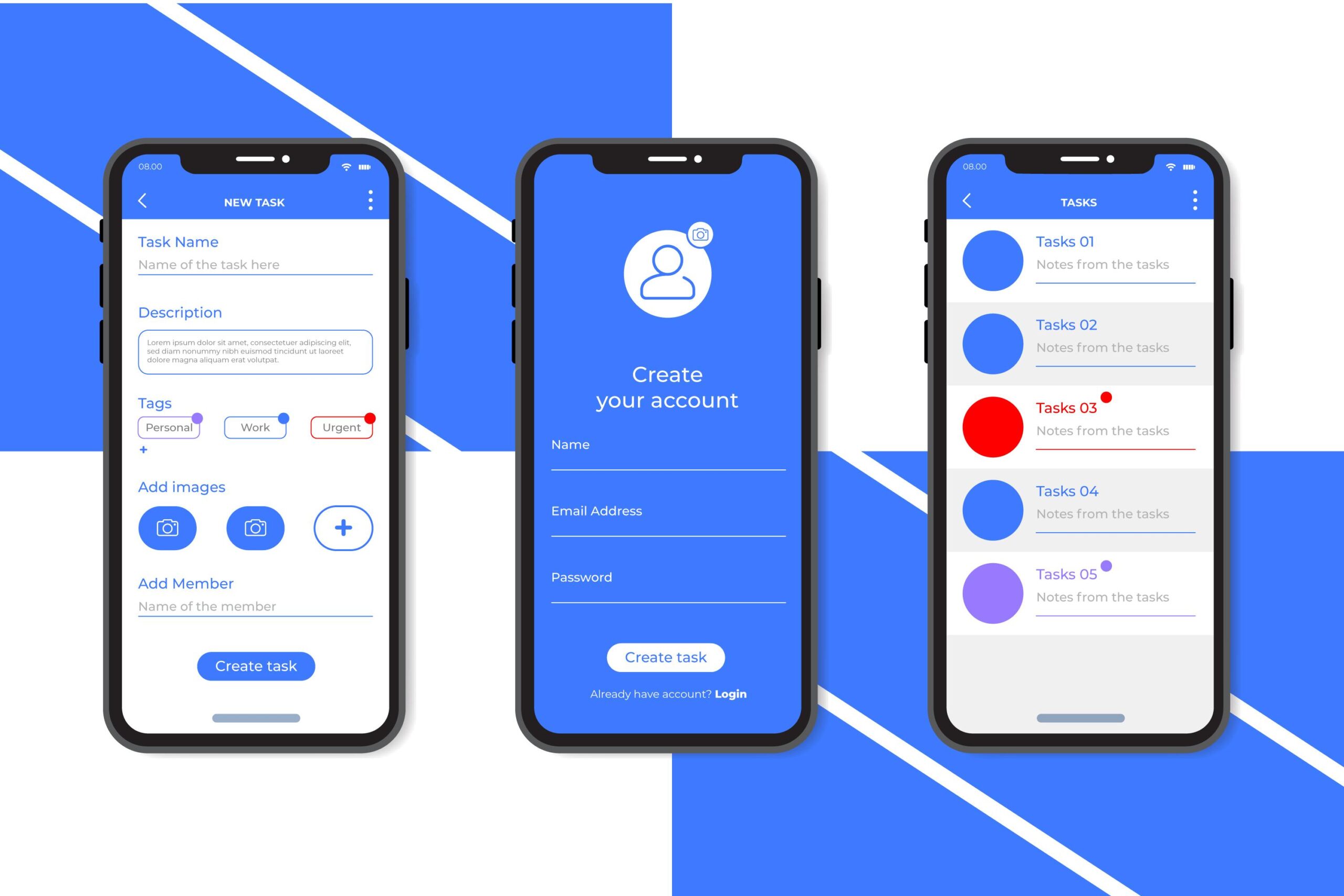
- User Interface (UI): Attractive, intuitive, and easy-to-navigate design
- User Experience (UX): Smooth interaction and optimized workflow for better engagement
- Backend: Databases, API integration, and secure data management
- System Compatibility: Full support for Android and iOS platforms
- Data Security: Encryption, authentication, and protection of sensitive information
Mobile App Uses Across Different Industries
-
• E-commerce: Shopping, mobile payments, and personalized recommendations
• Healthcare: Appointment scheduling, activity tracking, and health monitoring
• Education: Interactive learning platforms, courses, and student engagement
• Banking: Mobile banking, bill payments, and fund transfers
• Government Services: Online requests, appointment booking, and citizen support
Steps to Build a Professional Mobile Application
- Define your idea and business objectives
- Conduct market research and competitor analysis
- Choose the right type of mobile application (Native / Hybrid / PWA)
- Design user interface (UI) and optimize user experience (UX)
- Develop the mobile app and integrate it with backend servers
- Test app performance, functionality, and security
- Launch the mobile app on app stores (Google Play & Apple App Store)
- Continuously market, update, and improve the mobile application
Frequently Asked Questions About Mobile Applications
Can a mobile application suit all industries?
Yes, mobile apps can be customized for any business or service.
How long does it take to develop a mobile application?
Development time depends on app complexity, features, and platform requirements.
Should I launch the app on both Android and iOS?
Launching on both platforms is recommended to reach the largest audience possible.
You can also read What is Application Security (App Security)?
Conclusion
Mobile Applications are not a luxury, but an essential tool to enhance your digital presence and increase customer engagement.
Developing professional apps means improving user experience, expanding your customer base, and boosting revenue.
At Happy Tech, we help you design and develop innovative mobile applications that meet market needs and achieve the highest standards of quality and efficiency.
By leveraging the latest technologies, we ensure your mobile apps stay ahead of the competition and deliver measurable business results.
Our team also provides ongoing support and updates, ensuring your app continues to evolve and meet changing user demands.
Partnering with us means your mobile application will not only succeed today but continue to drive growth and engagement well into the future.