Fast Link
- What is the Internet of Things (IoT)?
- What is the Industrial Internet of Things (IIoT)?
- Differences between IoT and IIoT
- Benefits of IoT in Daily Life
- Benefits of IIoT in Business and Industry
- Technical Architecture of IoT and IIoT Systems
- Practical Applications Across Sectors
- How to Choose the Right System for Your Project
- Frequently Asked Questions
- Conclusion
What is the Internet of Things (IoT)?
The Internet of Things (IoT) is a network of devices connected to the internet that exchange data with each other without direct human intervention, aiming to improve daily life and increase efficiency.
These devices include:
• Smartphones
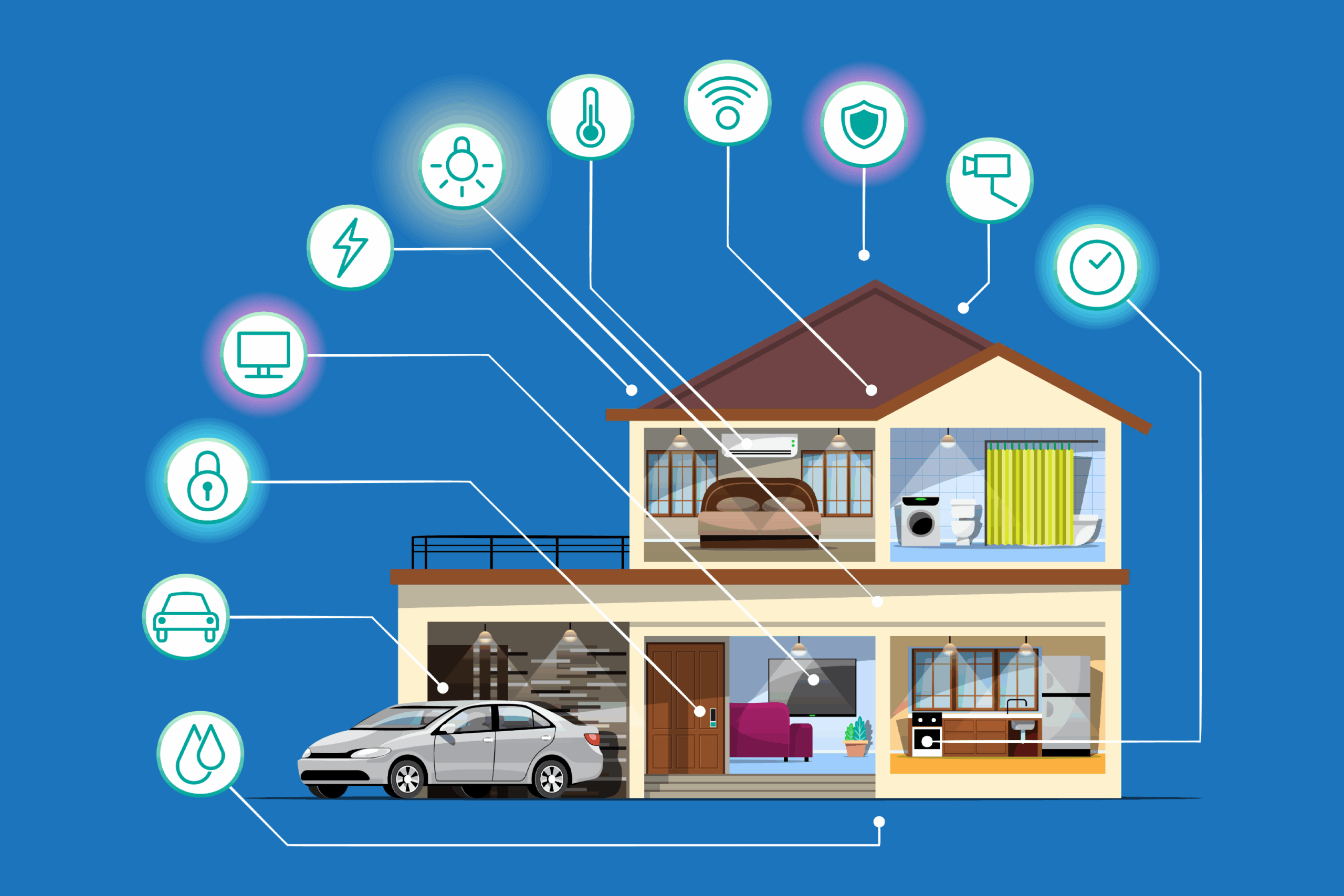
• Smart home appliances
• Surveillance systems and cameras
• Wearable sensors
IoT connects the physical and digital worlds, enabling smart monitoring and control anytime, anywhere.
What is the Industrial Internet of Things (IIoT)?
The Industrial Internet of Things (IIoT) is an advanced branch of IoT that focuses on connecting devices and machines in industrial sectors, factories, and large enterprises to improve productivity and reduce downtime.
Examples of IIoT systems include:
• Smart production lines
• Quality control devices in factories
• Predictive maintenance systems
• Smart energy networks
IIoT is primarily used in production and heavy industry environments, where precision and security are critical.
Differences between Internet of Things (IoT) and Industrial Internet of Things (IIoT)
1.Scope:
- Internet of Things (IoT): Focuses on consumers and daily life.
- Industrial Internet of Things (IIoT): Focuses on industrial applications and enterprises.
2.Security Level:
- Internet of Things (IoT): Medium-level security suitable for home devices.
- Industrial Internet of Things (IIoT): High-level security to prevent industrial losses.
3.Data Volume:
- Internet of Things (IoT): Relatively limited data.
- Industrial Internet of Things (IIoT): Large volumes of data requiring advanced analytics.
4.Impact:
- Internet of Things (IoT): Enhances personal convenience and experience.
- Industrial Internet of Things (IIoT): Improves efficiency and reduces industrial costs.
Benefits of IoT in Daily Life
- Remote control of devices via applications.
- Energy savings through smart systems.
- Time savings via automation.
- Enhanced security in homes and offices.
- Data collection and analysis to improve services.
Benefits of IIoT in Business and Industry
- Increased production efficiency.
- Predictive maintenance to avoid breakdowns.
- Reduced operational costs.
- Improved product quality.
- Accurate monitoring of production lines.
Technical Architecture of IoT and IIoT Systems
These systems rely on key components including:
- Sensors: To measure environmental or operational data.
- Connectivity Networks: Such as Wi-Fi, 5G, or LPWAN.
- Processing Platforms: For data analysis and decision-making.
- User Interfaces: For monitoring and control.
- Security Systems: To protect data and prevent breaches.
Practical Applications Across Sectors
-
• Healthcare: Remote patient monitoring.
• Energy: Efficient electricity management.
• Agriculture: Smart irrigation based on soil conditions.
• Transportation: Vehicle tracking and route optimization.
• Manufacturing: Improving production and reducing waste.
How to Choose the Right System for Your Project
- Define your objectives clearly (production improvement, security, cost reduction).
- Choose a suitable connectivity technology (5G, Wi-Fi, LPWAN).
- Ensure system compatibility with your existing devices.
- Verify security level and data protection measures.
- Rely on a trusted provider offering continuous technical support.
Frequently Asked Questions about IoT and IIoT
Can IoT be used in factories?
Yes, but IIoT is recommended for large production environments.
Are IIoT systems secure?
Yes, they rely on high-level security protocols.
Can IoT and IIoT be integrated into one system?
Absolutely, integration is possible to maximize benefits.
How long does it take to implement an IIoT project?
It depends on the project size and the number of devices to be connected.
You can also read What is Application Security (App Security)?
Conclusion
The Internet of Things (IoT) and Industrial Internet of Things (IIoT) represent a true revolution in connecting the physical and digital worlds.
Whether you seek personal convenience or industrial efficiency, these technologies provide greater control, higher security, and more accurate data.
Invest today in IoT or IIoT solutions to take your business or life to the next level.